
Conference Theme
Multilateralism, Democracy, Diversity: Communication for a More Just World
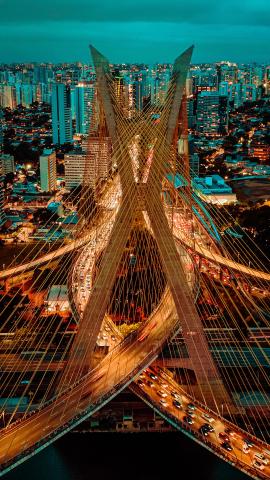
The 70th IAMCR Conference, hosted by the University of São Paulo (USP), takes as its theme Multilateralism, Democracy, Diversity: Communication for a More Just World. The theme places communication at the center of three interconnected crises that define our time: the fraying of global governance, the erosion of democratic institutions, and the deepening of social fragmentation. It invites interdisciplinary inquiry into how media and technology either perpetuate global injustice or help build systems that are more equitable. Each of these crises will be addressed in the conference plenaries, with attention to the crosscutting challenges they share and to the communication systems in which they are intertwined.
At the core of the theme, Multilateralism in the digital age, is a critical examination of how digital platforms and global media systems sustain or undermine international dialogue and policymaking. This includes scrutiny of digital sovereignty: questioning the concentration of technological power in a few global hubs and advocating governance frameworks that give all nations, particularly those of the Global South, an equitable voice over data and artificial intelligence. In this sense, the theme is an intervention against algorithmic colonialism and for a fairer distribution of global resources. Latin American scholars have made significant contributions to this debate, showing how platforms and AI challenge national autonomy and shape the Global South’s role in the governance of data and technology.
Focusing on Democracy and Diversity, the theme addresses the global rise of disinformation, extreme polarisation, and authoritarian populism. This context demonstrates that the health of democracy is inseparable from the vitality and fairness of its public sphere. Here too, Latin America offers a vital vantage point, both through decolonial studies—which originated in the region—and through the epistemologies of Indigenous peoples, which challenge established ways of understanding and narrating the world and of thinking about communication systems from other places and in other forms, all of which will be explored in plenaries and sessions.
Returning to Brazil more than twenty years after the last Brazilian edition (Porto Alegre, 2004), and to Latin America after a decade, the conference responds to an urgent need to produce knowledge about the contemporary world from the perspective of the Global South, a commitment IAMCR has increasingly pursued in recent years. This choice is political and academic as well as geographic. Without setting aside North-South exchange, the conference seeks to strengthen South-South dialogue among researchers from Latin America, Africa, and Asia, whose peripheral realities offer essential critical keys for understanding today’s global crises. It aims to serve as a platform for challenging hegemonies, decolonizing media studies, and advancing communication for social justice.