

Venue
School of Communications and Arts (ECA)
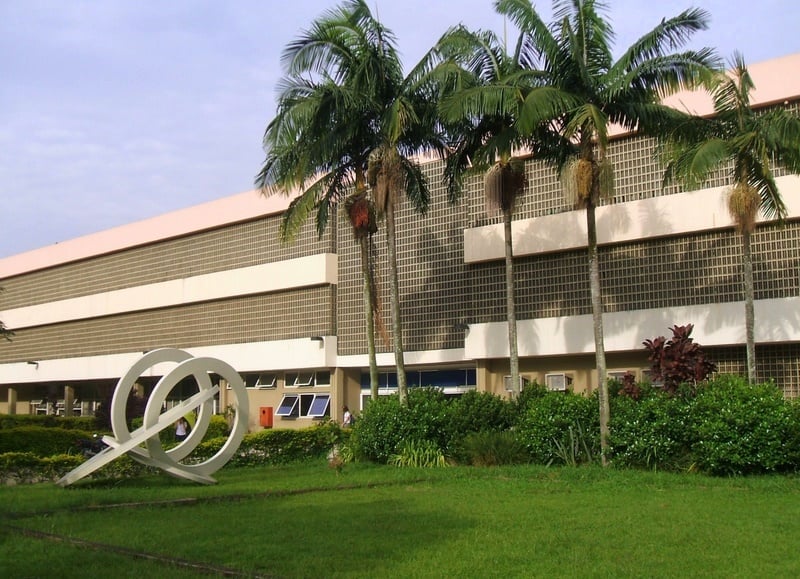
Founded in 1966, the School of Communications and Arts (ECA) at the University of São Paulo is one of the most renowned centers for education, research, and artistic creation in Brazil and across the Ibero-American region. Since its foundation, ECA has played a pivotal
role in training professionals who shape the field of communication, arts, and culture in the country.
Through its 14 regular graduation courses – between bachelor and licentiate degrees –, six graduate programs and a School of Drama, ECA offers interdisciplinary education that fosters critical thinking, creativity, and knowledge creation. The School also hosts more than 60 research centers and study groups spanning diverse fields of knowledge, providing a wide range of collaboration opportunities.
This vision is supported by modern facilities, including the Laboratory Theater, the Espaço das Artes (Arts Space), the Department of Music auditorium, and fully equipped radio, TV, and photography studios. The School also maintains specialized laboratories (audiovisual, musical acoustics, computing, creative writing) as well as studios for painting, sculpture, ceramics, and woodworking.
Strategically located on USP’s Butantã campus in São Paulo, the School benefits from easy access to public transportation and proximity to the city’s rich cultural life. Within a strong framework of international collaboration, ECA establishes itself as a hub for culture, communication, technology, and arts.
University of São Paulo
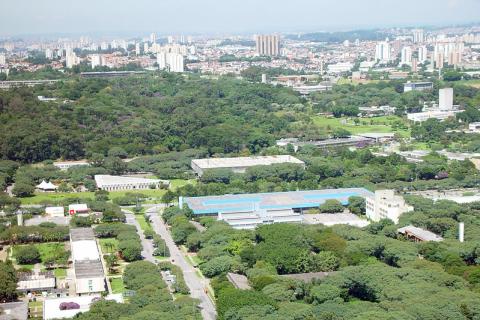
Founded in 1934, the University of São Paulo (USP) is Brazil 's largest public university. Renowned for its excellence in teaching, research, and innovation, USP consistently ranks among the top universities in Latin America and the Ibero-American region, featuring in major international evaluations such as Times Higher Education World University Rankings, QS World University Rankings and SCImago Institutions Ranking.
In addition to its academic excellence, USP reaffirms its commitment to sustainable development and social responsibility. The university is aligned with the United Nations Sustainable Development Goals (SDGs) and promotes concrete initiatives across the environmental, social, and economic dimensions. In recognition of these efforts, USP has been ranked among the 100 most sustainable universities in the QS Sustainability Ranking.
With a strong international presence, state-of-the-art infrastructure, and a clear impact on society, USP is a leading hub for those seeking a comprehensive and interdisciplinary education deeply connected to global challenges.
São Paulo City
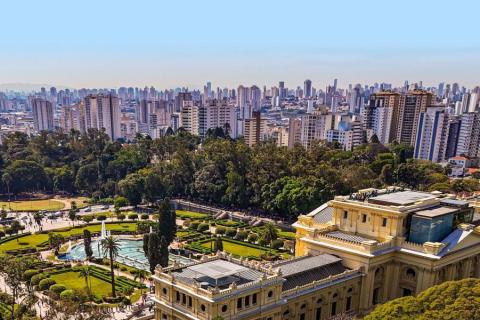
Home to nearly 12 million residents São Paulo is Latin America’s largest metropolis and a vibrant global crossroads. Far more than a financial hub, the host city of IAMCR 2027 is a dynamic mosaic where cultures from around the world meet and intertwine.
While celebrated for its modern cosmopolitan atmosphere, São Paulo’s identity is deeply rooted in its Indigenous and African heritage. Key city landmarks—including the Ibirapuera neighborhood ("rotten wood"), the Anhangabaú valley ("river of evil spirits"), and the Tietê River ("true waters")—carry Tupi names from the region’s original inhabitants.
African heritage is the foundational force that built the capital and continues to fuel its artistic and social vitality. Landmarks like the Church of Santa Cruz das Almas dos Enforcados and the Memorial dos Aflitos stand as enduring symbols of Black history and resilience at the heart of the city.
Over the decades, successive waves of migration—including Japanese, Italian, Arab (particularly Lebanese), Chinese, and Korean communities—have added rich, vibrant layers to São Paulo's urban tapestry. Today, the city’s distinct neighborhoods stand as living testaments to this convergence, offering visitors an endless cultural journey—most notably reflected in its world-renowned culinary scene, a source of immense pride for paulistanos. We invite you to explore São Paulo during IAMCR 2027—a city of infinite paths, perspectives, and encounters.