IAMCR is delighted to announce the winners of the 2026 Decolonising the Digital Award. This award recognises outstanding academic work that contribute to our understanding of the new global dynamics of digital politics, cultures, and infrastructures, with the aim of identifying modes of control and resistance, and ultimately, challenging digital colonialism.
The award will be formally presented at a special session during the IAMCR 2026 conference in Galway.
The winners are:
- "Digital ID as surreptitious experimentation in the humanitarian-tech industry: an ethnography of a biometric pilot in a refugee camp in the Thailand-Myanmar border" by Mirca Madianou (Goldsmiths, University of London), Charlotte Hill (Chiang Mai University) and Hayso Thako (Chiang Mai University).
- "Producing Legitimacy: Professional Cultural Logics, Socio-Technical Workflows, and Gendered Representation in Postcolonial Political Organisations" by Mark Rasquinha (Auckland University of Technology) and Helen Sissons (Auckland University of Technology)
- "Digital Empires: Huey P. Newton’s Theory of Revolutionary Intercommunalism and Contemporary Theories of Techno-Exploitation and Extractive Digital Economies" by Brooklyne Gipson (Rutgers University)
Digital ID as surreptitious experimentation in the humanitarian-tech industry: an ethnography of a biometric pilot in a refugee camp in the Thailand-Myanmar border
by Mirca Madianou, Charlotte Hill and Hayso Thako.
Submitted to the Communication Policy and Technology Section
The Award Selection Committee stated:
'This paper offers a compelling critique of the technology-humanitarian nexus through its analysis of digital ID systems and “surreptitious experimentation” on refugees. Reviewers praised its clarity, strong conceptual framing, and sharp critique of colonial logics in digital health aid, highlighting its important contribution to decolonising digital technologies.'
Abstract
This paper focuses on a technological pilot involving a digital identity programme that was introduced in the hospital of a refugee camp along the Thailand-Myanmar border. Drawing on an 18-month long ethnographic study of refugees’ experiences with biometric systems, the article analyses the pilot as an example of ‘surreptitious experimentation’. Surreptitious experimentation is symptomatic of the wider commercialisation and digital infrastructuring of the humanitarian space which we make sense though the term ‘humanitarian-tech industry’. This is a mixed methods study involving semi-structured and group interviews, participatory art sessions and ethnography.
In total, we spoke with 174 refugees and 27 expert participants involved in the aid operations. The research found that the digital ID system was implemented despite local misgivings. The term ‘surreptitious’ illustrates the fact that the new system was not announced as a ‘pilot’, but rather simply rolled out to replace existing forms of patient registration. Because the pilot took place in the infrastructural background it remained hidden. The article documents the lack of local understanding and meaningful consent among refugees. The promise of ‘self-sovereign’ decentralised identity advocated by the pilot sponsors was never communicated to the local communities let alone ever realised, even when a need for data portability emerged. Instead, the article observes that the pilot introduced harms and amplified the asymmetries which already exist in humanitarian and medical humanitarian settings in particular. As an exemplar of surreptitious experimentation, the digital ID pilot reworked and revitalised the colonial logics of aid.

Mirca Madianou is Professor in the Department of Media, Communications and Cultural Studies at Goldsmiths, University of London. Her research focuses on the consequences of digital infrastructures and AI in Global South contexts especially in relation to migration and humanitarian emergencies. Her latest book is Technocolonialism: when technology for good is harmful.
Charlotte Hill is Assistant Professor in Media Arts and Design at Chiang Mai University. She has worked with displaced communities along the Thai-Myanmar border for over ten years, researching how young Karen navigate everyday life in protracted displacement, including their digital experiences, gender, and well-being.

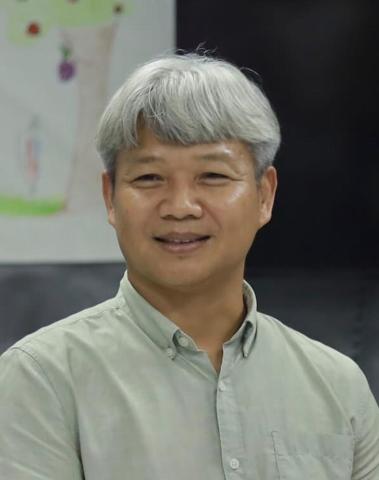
Hayso Thako is Postdoctoral Researcher at Chiang Mai University. He has worked with refugee communities along the Thai-Myanmar border and serves on the Karen Refugee Committee. He served as chair of the Karen Peace Support Network and the Asia Pacific Network of Refugees.
Producing Legitimacy: Professional Cultural Logics, Socio-Technical Workflows, and Gendered Representation in Postcolonial Political Organisations
by Mark Rasquinha and Helen Sissons
Submitted to Organisational Communication Working Group
The Award Selection Committee stated:
'The paper stands out for its originality, clear argumentation, and strong methodological design. Drawing on innovative multimodal video ethnography in the under-researched South Asian context, it compellingly demonstrates how political PR and socio-technical infrastructures reproduce gendered hierarchies and digital coloniality. Reviewers highlighted its rich narratives, theoretical contribution, and provocative insight.'
Abstract
Political organisations in the Global South adopt gender equity frameworks and rituals such as International Women’s Day, as evidence of organisational progress and legitimacy (Rasquinha, 2024). Within public relations scholarship, such practices are often evaluated through diversity, equity, and inclusion (DEI) frameworks that assume visibility leads to transformation (Mundy & Bardhan, 2023). However, this assumption obscures how gender representation operates as organisational work shaped by postcolonial power relations and digitally mediated norms of legitimacy.
Little is known about how women practitioners negotiate these demands when global gender scripts are translated into local political contexts marked by hierarchy and symbolic authority. This gap limits understanding of how digital coloniality is enacted not only through platforms, but through routine communication. Accordingly, the research asks: How do women political public relations practitioners perform gender representation as organisational legitimacy work within postcolonial political organisations structured by digitally mediated norms of visibility and authority?
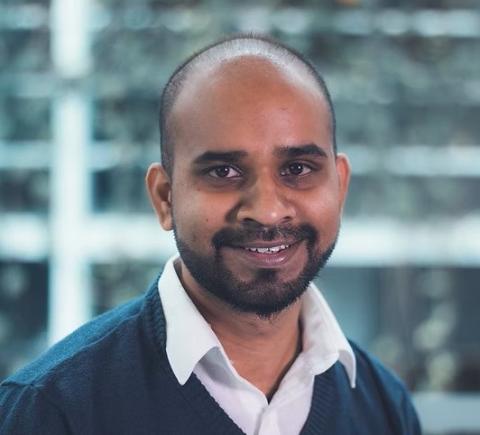
Mark Rasquinha is an early-career PhD researcher who is interested in exploring the intersection of culture, technology, communication practice and society examining how these areas converge in political communication strategies. Mark is a current member of the TOROA Research Center at AUT, where he actively contributes to ongoing research on the evolving dynamics within public relations in a digital age.
Helen Sissons is Associate Professor at Auckland University of Technology, New Zealand, and co-director of Toroa Centre for Communication Research. Her research uses ethnography and critical discourse analysis to examine how power operates in professional communication and how digital technologies become embedded in workplace routines. She focuses particularly on journalism, political communication and digital workflows, with recent work exploring newsroom transformation, online harm and professional communication in postcolonial contexts. Before entering academia, she worked as a journalist with the BBC.
Digital Empires: Huey P. Newton’s Theory of Revolutionary Intercommunalism and Contemporary Theories of Techno-Exploitation and Extractive Digital Economies
by Brooklyne Gipson
Submitted to the History Section
The Award Selection Committee stated:
'This paper makes a persuasive and original theoretical contribution by tracing contemporary decolonial critiques of technology to Huey P. Newton’s Theory of Revolutionary Intercommunalism. Reviewers appreciated its historical depth and engagement with racial capitalism and Black Marxism, highlighting its implications for contemporary activism and future research.'
Abstract
Terms like platform capitalism (Srnicek, 2016), surveillance capitalism (Zuboff, 2019), data colonialism (Couldry and Mejias, 2019), digital colonialism (Wylie, 2019), and technofeudalism (Varoufakis, 2023) describe how private tech companies’ extraction of personal data contributes to objectification, commodification, and exploitation of human lives and labor in ways reminiscent of historical extractive economies. While many scholars frame these problems as contemporary issues, these narratives have deeper roots.
This study revisits Huey P. Newton’s theory of revolutionary intercommunalism through historical analysis of primary documents, showing how it anticipates these frameworks and extends their logic by theorizing the U.S. as an empire. It starts by asking why the Black Panther Party changed its 10-point platform to include "the people's control of community technology." Newton’s writings and speeches on technology and intercommunalism offer early insights into the relationship between technology, society, and power. His vision of revolutionary intercommunalism proposed radical global interconnectedness to counter corporate-dominated power asymmetries. By situating Newton’s ideas as a precursor to modern critiques, this study advances understanding of technologically enabled extractive economies and their implications.
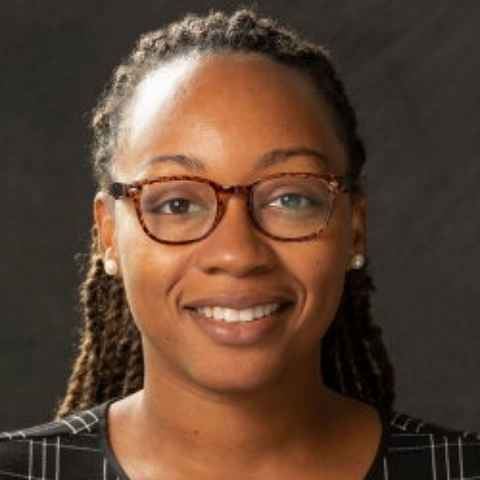
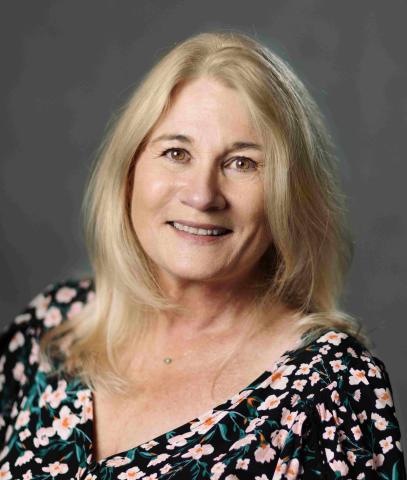
Brooklyne Gipson is an assistant professor of Journalism and Media Studies at Rutgers University, New Brunswick’s School of Communication and Information. Her interdisciplinary research explores digital and social media environments, Black feminist digital/technology studies, and the intersection of race, gender, social media, and power.
Decolonising the Digital Award Selection Committee
- Weiyu Zhang, Chair (National University of Singapore)
- Andrea Medrado (University of Exeter, UK)
- Benjamin Birkinbine (University of Nevada, Reno, USA)
- Claudia Padovani (University of Padova, Italy)
- Guy Hoskins (Carleton University, Canada)
- Julia Pohle (WZB Berlin Social Science Center, Germany)
- Leah Komen (Daystar University, Kenya)
- Usha Raman (University of Hyderabad, India)