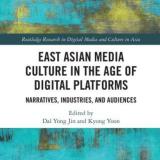
On 29 January, 2026, the Political Economy and the Popular Culture Sections hosted a panel discussion on East Asian Media Culture in the Age of Digital Platforms, focusing on the convergence of popular culture and digital platforms in the East Asian context. Watch the recording here.

On 26 January 2026, the Music, Audio, Radio & Sound Working Group hosted a webinar exploring how global music streaming platforms are reshaping music production, distribution, and consumption across different contexts. Watch the recording here.

The Gender and Communication Section has released its December 2025 newsletter, featuring a call for proposals, a call for reviewers, an interview with Haohan Yuan and more.

The Participatory Communication Research Section has issued its December newsletter featuring the CfP for IAMCR2026, a call for participation at the conference, and updates from members. Read it here.

IAMCR invites the submission of abstracts for its 2026 conference, to be held from 28 June to 2 July 2026 in Galway, Ireland, hosted by the University of Galway. The deadline for submission is 3 February 2026 at 23:59 UTC.

Two new e-books from IAMCR’s Visual Culture Working Group explore how arts, technologies, and digital media shape today’s global cultures, examining algorithms, images, and audiences through creative, critical, and interdisciplinary perspectives.
IAMCR books
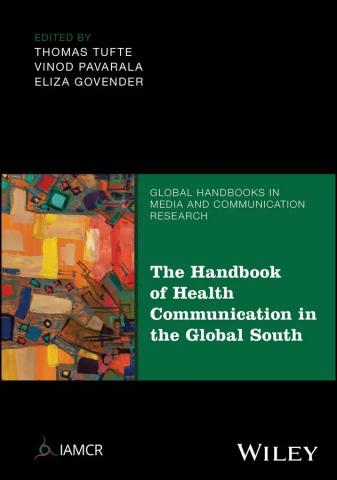
Edited by Thomas Tufte, Vinod Pavarala and Eliza Govender, this is the thirteenth title in the series Global Handbooks in Media and Communications, co-published by IAMCR and Wiley-Blackwell.
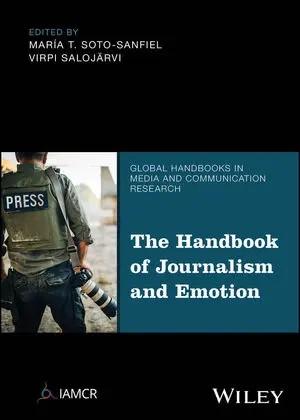
Edited by María T. Soto-Sanfiel and Virpi Salojärvi
This book redefines how we understand journalism in today’s emotionally charged world, bringing together 60 leading scholars from across five continents to investigate how emotion shapes journalism theory, production practices, content, and audience engagement.
Members' books
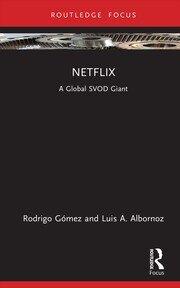
Written by IAMCR members Rodrigo Gómez and Luis A. Albornoz this book highlights Netflix's pivotal role in shaping the landscape of audiovisual distribution and production on a worldwide scale.
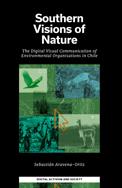
Written by IAMCR member Sebastián Aravena-Ortiz this book examines how Chilean environmental organisations use visual digital media to shape public discourse, build collective identity, and collaborate during political upheaval.
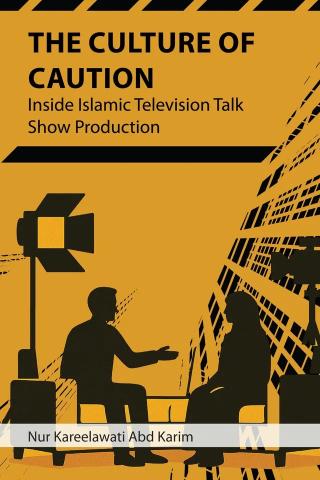
Written by IAMCR member Nur Kareelawati Abd Karim this book explores the ‘culture of caution’ within Islamic television talk show production, with a primary focus on the Islam Channel in the United Kingdom.
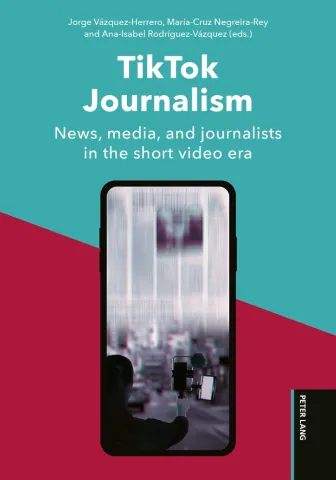
Edited by IAMCR members Jorge Vázquez-Herrero, María-Cruz Negreira-Rey and Ana-Isabel Rodríguez-Vázquez this book offers offers a pioneering contribution to the scholarly exploration of journalism on TikTok.