
IAMCR members are cordially invited to attend the Association's General Assembly which will take place on 4 July 2024 at 15:45, at the Te Pae Convention Centre, Ōtautahi Christchurch, Aotearoa New Zealand.

The voting period for the Sections and Working Groups heads election has ended. We would like to thank all of the candidates who expressed their willingness to serve as a section or working group officer and also to all who voted. See the results here.

The elections for IAMCR Executive Board (EB) and International Council (IC) are over. Daya Thussu was elected president and will be joined on the Executive Board by 2 vice-presidents, Karen Arriaza Ibarra and Andrea Medrado, alongside Jeremy Shtern as Secretary General and Skye Doherty as Treasurer. Congratulations to the new EB and IC members, and thanks to all participants and candidates.

The Gender and Communication Section has issued its April newsletter with updates on the upcoming Christchurch conference, highlights of the recent International Women's Day 2024 webinar, and calls for papers and publications that might be of interest to its members. Read it here.

We are pleased to announce the appointment of Ayesha Jehangir and Shabir Hussain as the IAMCR Peace Fellows for their project Bridging Narratives: Exploring feasibility and impact of collaborative peace journalism initiatives between Afghan and Pakistani journalists.

The Participatory Communication Research Section regularly issues newsletters with information of interest to its members. The March 2024 issue includes information about the upcoming Section Head elections, IAMCR 2024 keydates and events and a call for abstracts. Read it here.
IAMCR books
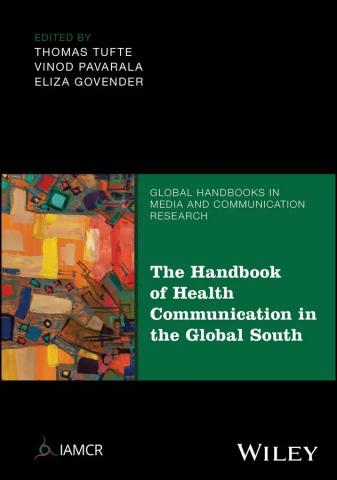
Edited by Thomas Tufte, Vinod Pavarala and Eliza Govender, this is the thirteenth title in the series Global Handbooks in Media and Communications, co-published by IAMCR and Wiley-Blackwell.
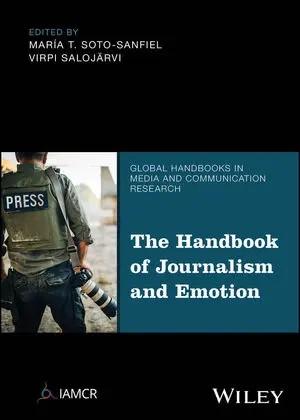
Edited by María T. Soto-Sanfiel and Virpi Salojärvi
This book redefines how we understand journalism in today’s emotionally charged world, bringing together 60 leading scholars from across five continents to investigate how emotion shapes journalism theory, production practices, content, and audience engagement.
Members' books
Written by IAMCR members Rodrigo Gómez and Luis A. Albornoz this book highlights Netflix's pivotal role in shaping the landscape of audiovisual distribution and production on a worldwide scale.
Written by IAMCR member Sebastián Aravena-Ortiz this book examines how Chilean environmental organisations use visual digital media to shape public discourse, build collective identity, and collaborate during political upheaval.
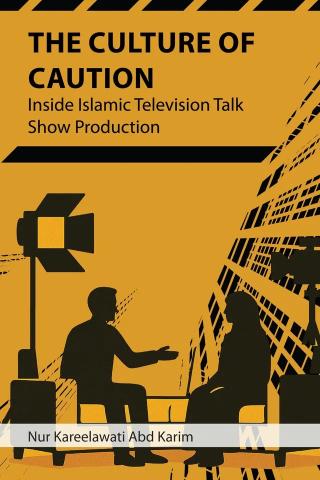
Written by IAMCR member Nur Kareelawati Abd Karim this book explores the ‘culture of caution’ within Islamic television talk show production, with a primary focus on the Islam Channel in the United Kingdom.
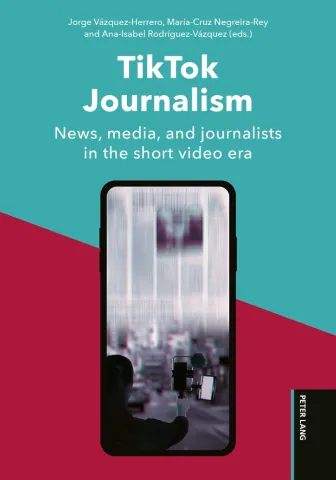
Edited by IAMCR members Jorge Vázquez-Herrero, María-Cruz Negreira-Rey and Ana-Isabel Rodríguez-Vázquez this book offers offers a pioneering contribution to the scholarly exploration of journalism on TikTok.